Microsoft Exchange Server Management

CNSPBD Provide best Microsoft Exchange Server Management Services which includes:
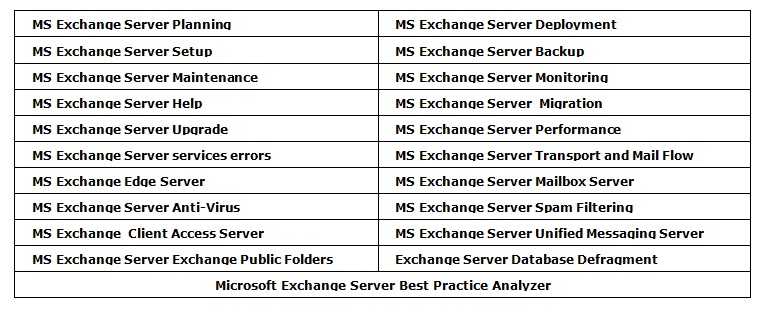
Microsoft Exchange Server Subscription Edition (SE) acts as an evergreen messaging platform with cloud-integrated capabilities. Its server roles deployment and configuration are optimized down to two primary roles, streamlining administration while lowering the total cost of ownership.
Here are the breakdown of the supported server roles and their functionality in Exchange SE:
Mailbox Server Role The Mailbox Server role contains the primary services needed for messaging. It merges both the legacy mailbox functions and the Client Access services from older architectures into a single, unified deployment.
Mail Services: Manages, houses, and handles all activity for active user mailboxes and holds the underlying Exchange Search engines and mailbox databases.
Client Access Services: Manages client authentication, proxying, and redirection services. It does not render data directly but exposes protocols such as HTTP/REST, POP3, and IMAP4.
Transport Services : Handles local and organizational routing and mail delivery.
Edge Transport Server Role :
The Edge Transport server role operates in your organization's perimeter network, enhancing security by separating internal infrastructure from external threats.
Anti-Spam and Anti-Malware: Inspects and filters external messaging traffic before it ever hits the internal Mailbox servers.
Mail Flow Rules: Applies custom transport rules to manage and control mail flow at the network's perimeter.
Configuration and Deployment Needs :
Depending on your organizational needs and licenses bought, deployment varies:
Standard Edition: Designed for smaller environments supporting 1 to 5 mailbox databases per server.
Enterprise Edition: Suited for larger deployments requiring 1 to 100 mailbox databases per server.
Coexistence Licensing: Available at no cost when running Exchange Server SE for hybrid environments (exclusively for recipient management).